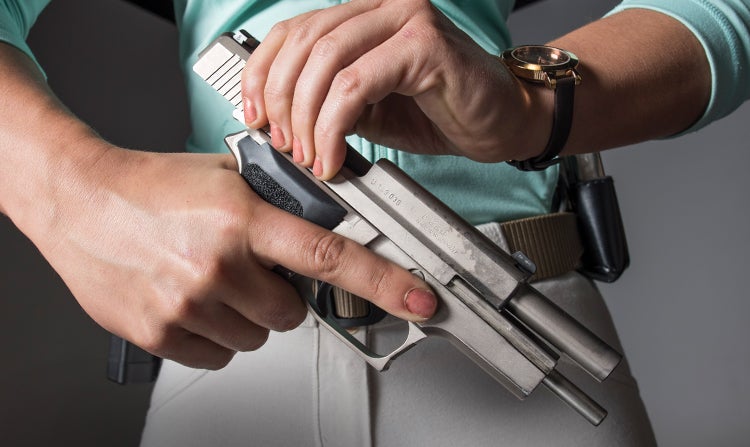
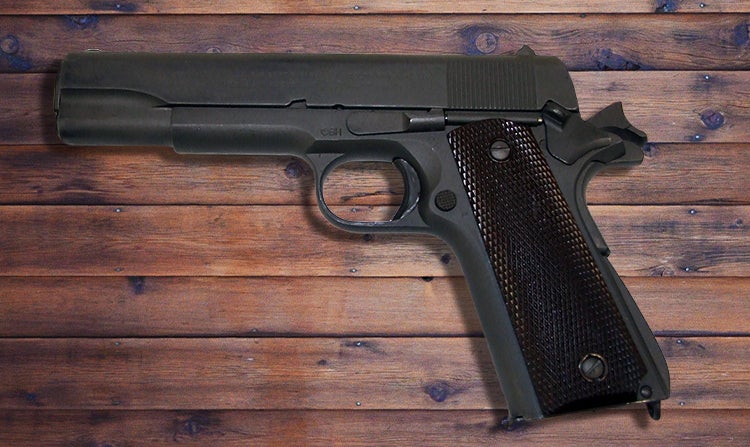
A double-action/single-action (DA/SA) firearm combines the features of both double- and single-action mechanisms. When the firearm discharges, the cycling slide will automatically cock the hammer to the rear. The rest of the shots fired will be in single-action mode, unless the hammer is manually lowered again. This action is also known as traditional double-action (TDA).
DA/SA typically refers to a semi-automatic, but in the case of a revolver, double-action generally means a weapon combining the ability to fire both double- and single-action. The trigger mechanism function of a DA/SA semi-automatic handgun is identical to a DA revolver. However, this is combined with the ability of most semi-automatics to self-cock the hammer when firing. The pistol can be carried with the hammer down on a loaded chamber, unlike a single-action semi-automatic. When the user is ready to fire, simply pulling the trigger, in double-action mode, will cock and release the hammer. This gives the positive aspects of a single-action trigger without the need to carry “cocked and locked” (with a loaded chamber and cocked hammer), or with an empty chamber, which requires the user to chamber a round before firing.