Getting Started
Deciding to carry a concealed firearm can be a lot to take on all at once. You have permits, gun shopping, training, self-defense liability insurance and then, of course, how you are going to carry that gun once you have purchased it. Many people stumble through a process of trial and error, but with the right pointers, you should be able to skip ahead in the line on your way to carrying comfortably and effectively.
When you are deciding how to carry, you will need to take into account your lifestyle, your body type and your experience level. Sure, the most basic type of holster - an outside-the-waistband unit - can sometimes be covered by an untucked shirt, a sport coat or another garment. But that does not work for everyone, and it can be tough to keep concealed. (This is about concealed carry, right?)
What follows is a guide to the most popular styles of carry as well as their positives and negatives, and I am hopeful that this info will help you find what works best for you.
What's in this guide
- The carry gear that matters more than your holster (Hint: most gun owners buy it last!)
- How the most common carry position becomes a liability in one situation many gun owners never see coming.
- Carriers who spend significant time behind the wheel face a daily friction point with THIS common holster setup ... and most online reviews never mention it.
- Who the appendix carry works best for. (And who it quietly punishes.)
- The pocket carry mistake that happens at the exact moment you need your firearm, and the one holster criteria that prevents it entirely.
- What actually separates on-body from off-body carry ... it is not what most carriers think!
Build the Foundation
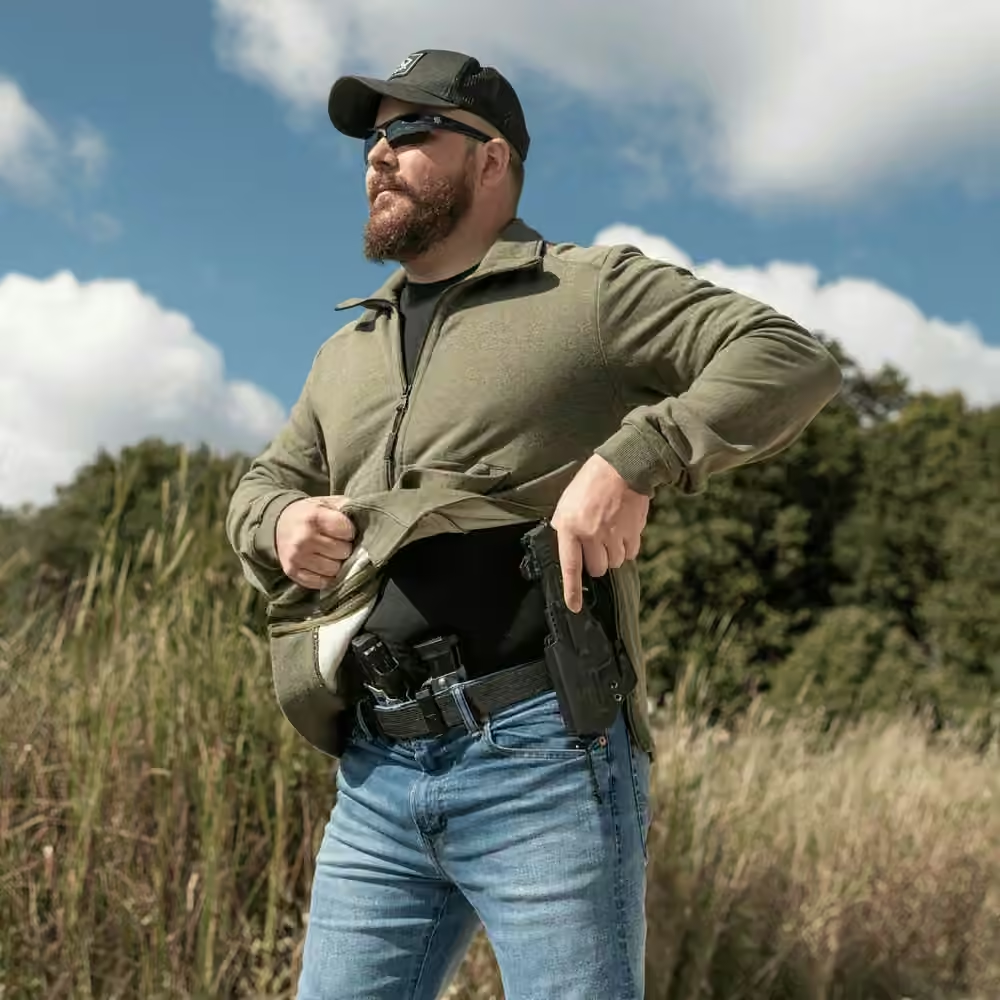
Before we get to holsters, it is important that you understand that the belt you are going to use to support your holster will be as important as the holster itself. You can put the world's best holster on a weak belt and will not get any better results than you would get by putting the world's worst holster on a good belt. If you are going to be carrying in a way that mounts your firearm to your belt, you are going to need to buy like you mean it.
If you are going to be using a non-belt carry method, you are going to need to follow the same principle. Weak gear will not only make your carry experience worse but also can very easily put you and your loved ones in danger. Remember what you have probably heard people say about everything from shoes to lawnmowers: Buy once, cry once. This is your personal safety we are talking about. You do not have to spend lavishly just for the sake of spending money, but you should source your gear from respected manufacturers and through respected brokers.
If your carry setup mounts to a belt, invest in a carry-specific belt before anything else. Once the foundation is solid, everything else becomes easier to evaluate.
Inside the Waistband (IWB)
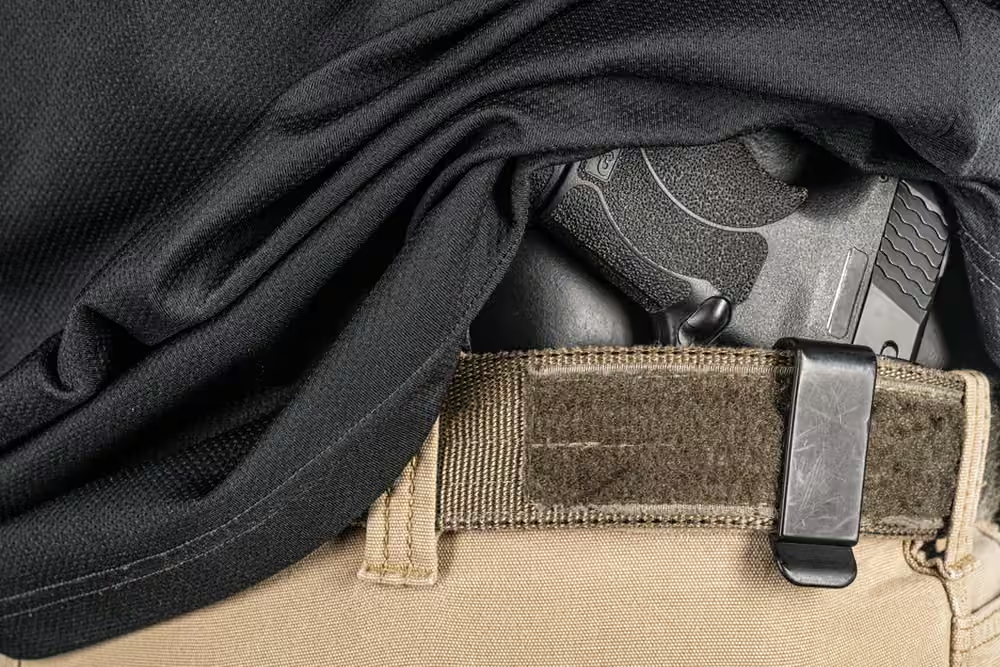
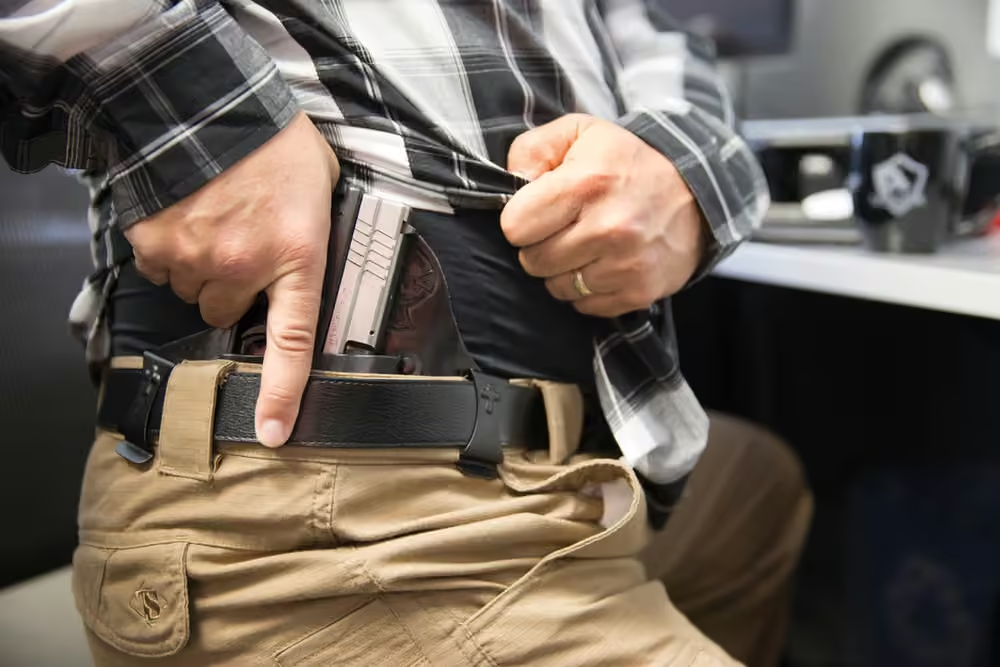
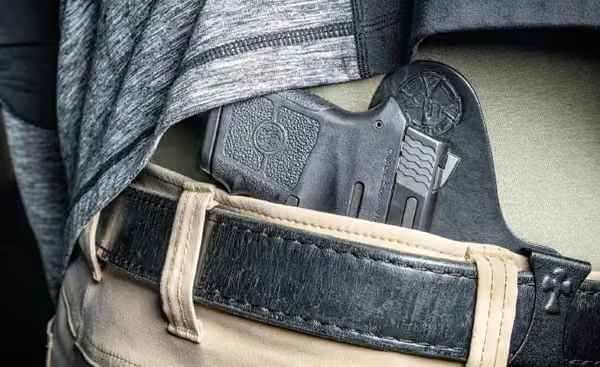
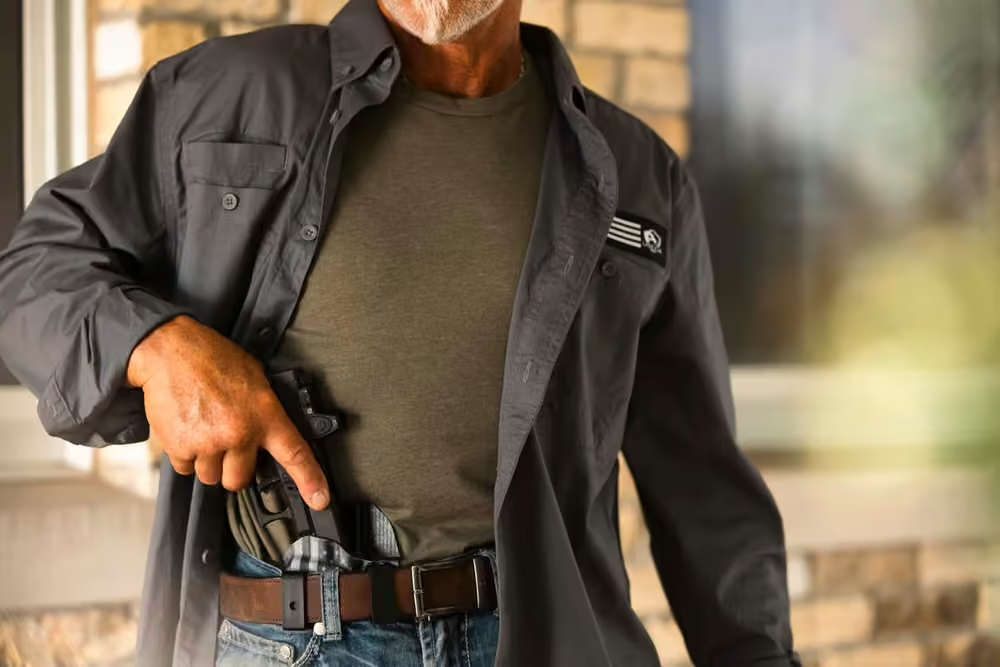
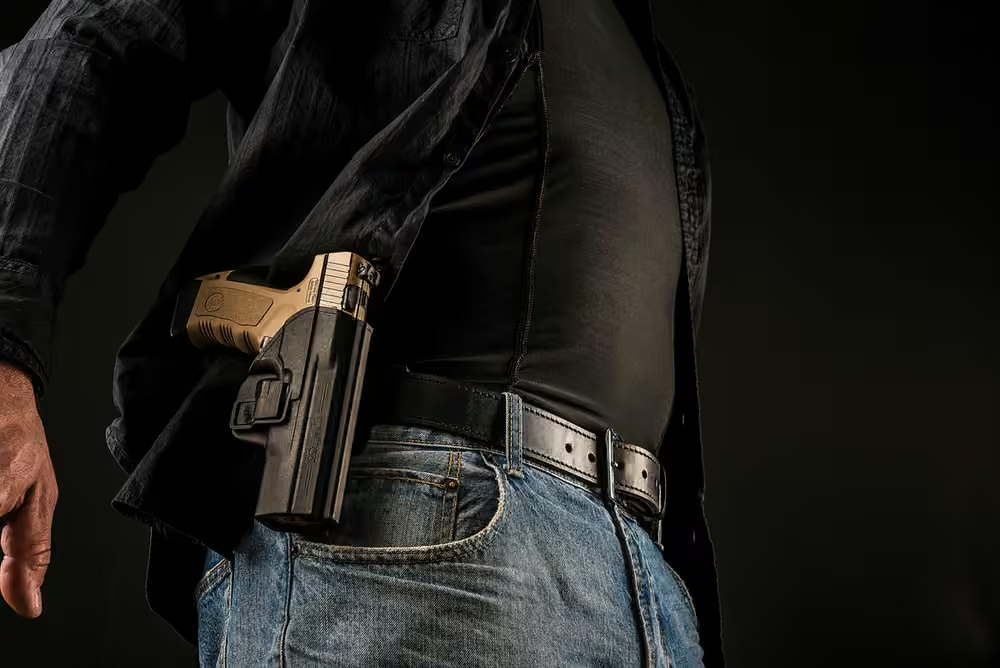
"IWB" is one of the most common ways to carry a semi-auto or revolver. An IWB holster positions your firearm behind your dominant hip and is worn between your pants and your body. You anchor the holster to either a belt or your pants via a strong metal clip. This allows you to carry comfortably and discreetly. Though an untucked shirt maximizes concealment with this method, you can also go with a "tuckable" IWB that allows you to tuck in your shirt and leave only the clips visible.
Best Uses
IWB can be a great option if you're looking for a basic carry setup, want to carry a larger firearm, or are of average to larger stature. (Men generally have an easier time concealing a firearm in this way than women do, though not always.)
Key Benefits
People tend to choose this method for comfort, convenience, and ease of concealment.
Important Considerations
It can be difficult drawing from a strong-side IWB with your off hand, which could be a detriment if you ever end up needing to access your firearm while you're injured. Standard IWB is also not necessarily the most comfortable if you spend a lot of time driving. And if your EDC (Every day carry) becomes visible due to your shirt riding up, you could be exposed as carrying a firearm (which can bring with it varying consequences). If a criminal knows you're carrying on your strong-side hip, it's possible for that criminal to try to disarm you.
IWB at the strong-side hip is one of the most practical starting points for most carriers, but it is not the right choice by default. It is the right choice when it fits your body, your wardrobe, and your daily movement.
Appendix Inside the Waistband (AIWB)
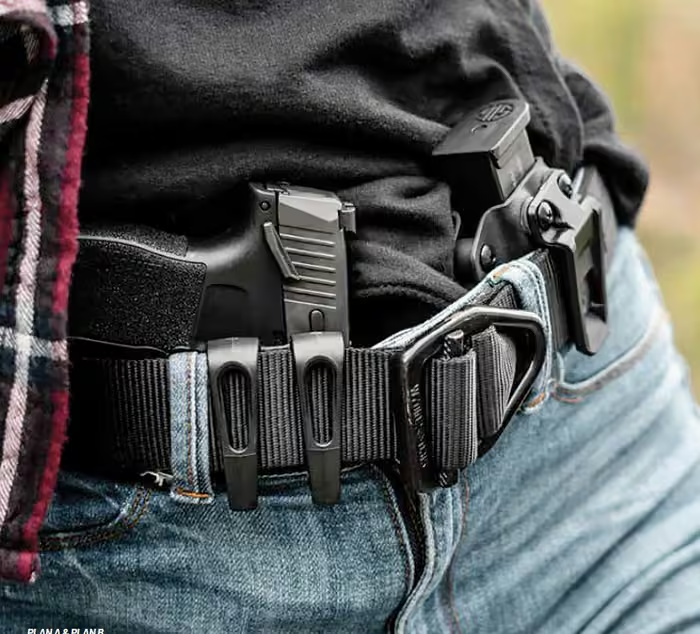
Popular for both revolvers and semi-autos of all sizes, "AIWB" positions your firearm at the 1 o'clock position on your waist (or the 11 o'clock position if you're left-handed). This keeps your firearm on the front of your body, allowing for a slightly faster draw and less chance of a disarm from the rear.
Best Uses
AIWB can work exceptionally well if you're slight in stature and are highly confident in your gun-handling skills.
Key Benefits
AIWB carriers cite greater comfort when they're driving or are otherwise seated. This method can also make it easier to draw with the non-dominant hand if the dominant hand is injured and retain the firearm if someone attempts a gun grab.
Important Considerations
You'll need to determine whether this method is physically comfortable for you and whether you're confident enough in your gun-handling skills to exercise the perfect trigger-finger discipline while you're drawing and reholstering.
AIWB is a practical on-body option for women of slighter build, particularly with a compact or subcompact frame. It works with a wider range of clothing than strong-side hip carry and delivers a real seated comfort advantage for everyday carry.
Pocket Carry
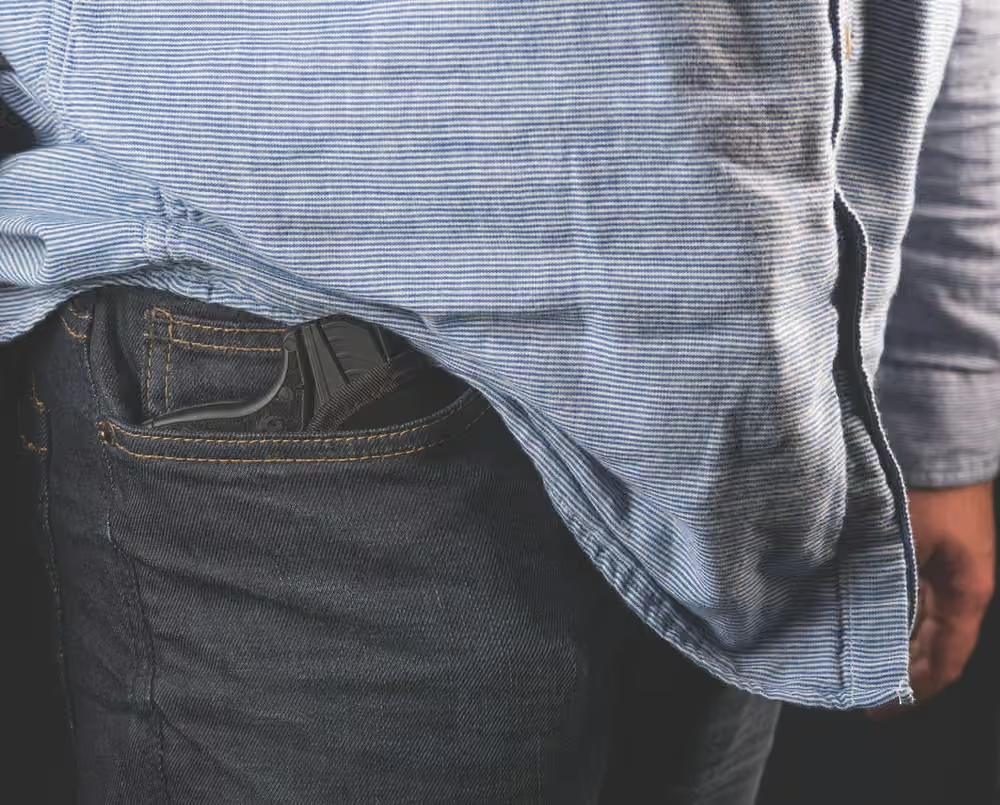
Pocket carry is popular for small revolvers and semi-autos. With this method, you place your firearm in a pocket holster and carry it in either of your front pockets, or even a back pocket. (NOTE: You should never carry a firearm in a pocket without some type of pocket holster.)
Best Uses
Pocket carry generally works best if you're interested in carrying a smaller firearm and are not interested in carrying anything in your waistband.
Key Benefits
Most people who choose pocket carry prefer this method for convenience, comfort, and ease of concealment.
Important Considerations
If you're carrying a firearm in pants, overalls, or a jacket pocket, it's important that you not carry anything else in that pocket. First, you need to be able to access that firearm without interference. Second, you cannot take the chance of anything else getting into the holster and either pressing your firearm's trigger, or damaging the firearm. It's also important that you choose a pocket holster that will remain in your pocket when you draw your firearm so that you're not left holding a pistol with the holster still attached. There's no way around it: Drawing from a pocket with your off-side hand can be anywhere from difficult to impossible, which can come into play if your dominant hand is injured. And never forget that back-pocket carry may leave you at high risk for a gun grab if anyone detects that you're armed.
Pocket carry works as a complete system: a dedicated pocket, a quality holster selected specifically for pocket retention, and nothing else sharing that space. Cutting corners on any of those three removes the benefit and introduces real risk.
Off-Body Carry
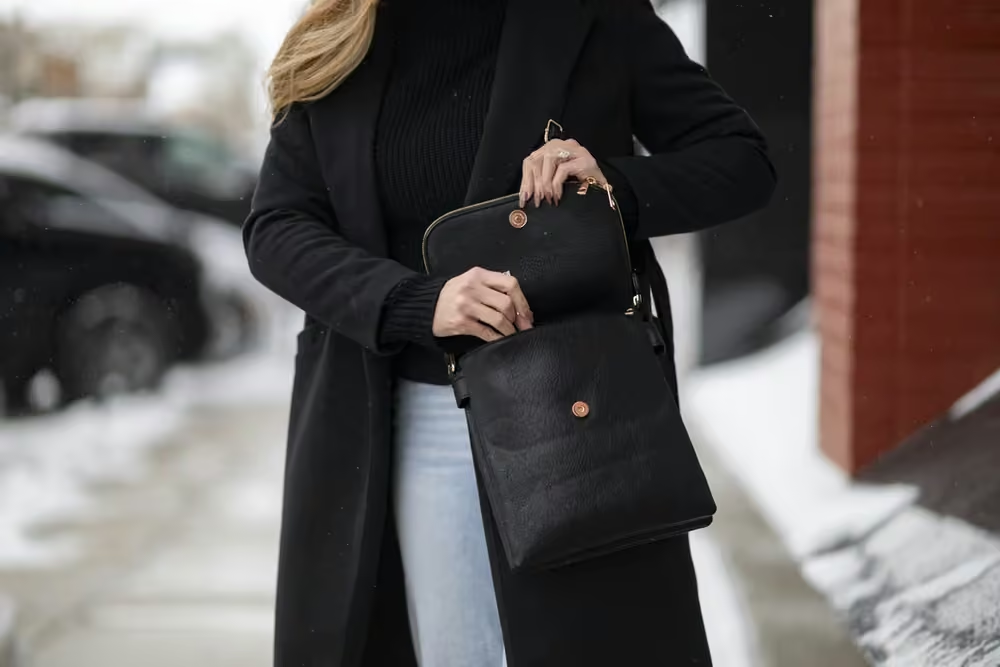
You can carry a firearm "off-body" in a dedicated firearms-carry device, or you can use a specific compartment in a normal bag or purse for carrying your firearm. But that firearm needs to be in a holster and by itself in whatever pocket you're carrying it for the same reasons listed above.
Best Uses
Off-body carry can work well if you dislike wearing a holster or if you find wearing a holster uncomfortable. It can also be a great choice if your clothing preferences make on-body carry difficult.
Key Benefits
People typically choose off-body carry for convenience or because it allows them to carry a larger firearm.
Important Considerations
When you're carrying off-body, it's essential that you maintain positive control over whatever it is in which you have your gun. My rule is that if you set it down while you're in a restaurant, it's "off-body" carry. If you carry in a fanny pack that you'll leave snapped around your waist while you're waiting for your meal, that's on-body carry.
If you're carrying off-body, it's your responsibility to keep your firearm under your control. You cannot allow unauthorized access to your firearm at any time.
A dedicated CCW crossbody bag or carry purse is a legitimate everyday carry solution for women whose daily wardrobe makes consistent on-body carry difficult. The control obligation is the same regardless of the carry device.
Garment Carry
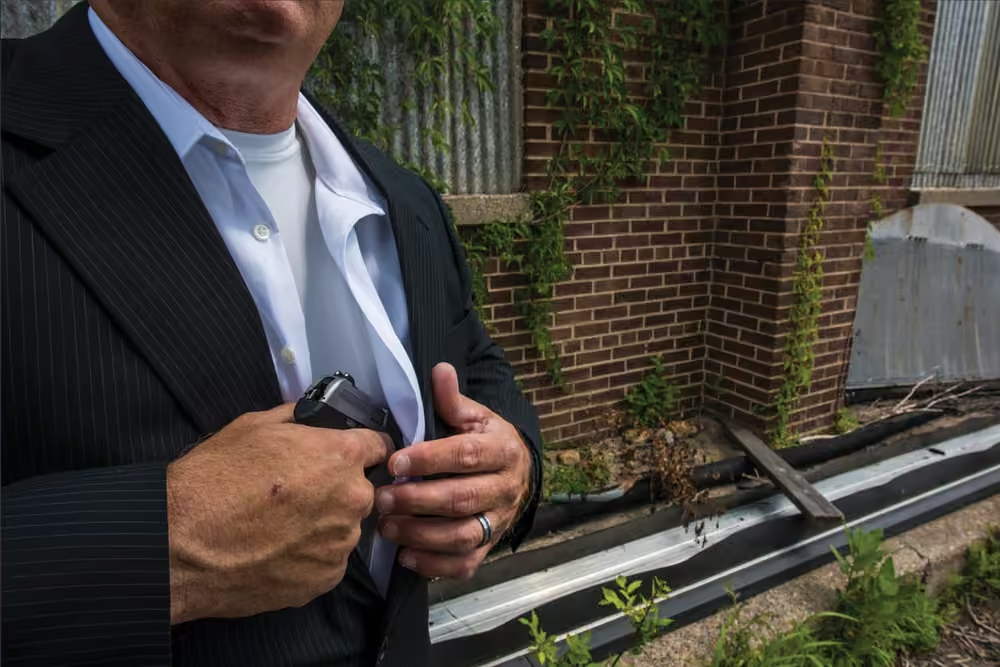
Many companies offer clothing or outerwear with pockets for firearms, and others offer holster systems that are worn more like garments than traditional holsters. A garment holster can be anything from a jacket with a gun-specific pocket that includes a holster to a separate, gun-carry-specific garment that you wear under your everyday clothes. This can be as simple as a bellyband, which is a fabric-and-Velcro strip that goes around your torso and holds a pistol, or as sophisticated as PHLster's Enigma, which is a belt and holster that you wear under your normal attire. (The latter is especially popular with women, though plenty of men enjoy it as well.)
Best Uses
A garment holster can be a great choice if you find a traditional holster uncomfortable or are looking for the deepest level of concealment possible. (It tends to work especially well for women who never wear pants with pockets or a belt.)
Key Benefits
People cite comfort, convenience, and ease of concealment as top benefits of a CCW garment.
Important Considerations
Something like the Enigma, which allows you to wear a traditional holster under your clothing without a belt, is very different from a jacket with a dedicated firearm pocket. If you elect to carry in a concealment garment, and that garment is a jacket, vest, or coat, you're going to have to follow the same rules as with off-body carry. You must retain control of your firearm at all times. No fair hanging your jacket - with a gun in it - over the back of a chair in a restaurant and then running to the restroom.
Belly bands, purpose-built athletic carry options, and systems like the PHLster Enigma exist specifically to address the "it doesn't work with what I wear" issue.
Key Takeaways
[001]
The belt is the foundation of belt-mounted carry. A quality carry belt is not optional when you want a holster to perform as designed.
[002]
IWB is a practical starting point for many carriers, but the right setup is always body-specific, clothing-specific and routine-specific.
[003]
AIWB can improve seated comfort and draw speed, but only when trigger-finger discipline is consistent under pressure.
[004]
The equipment gap for athletic wear and form-fitting clothing is real and solvable. Belly bands, carry leggings, and systems like the PHLster Enigma are purpose-built to close this gap.
[005]
Off-body and garment carry demand continuous positive control. Responsibility does not pause when the carry device leaves your body.
[006]
There is no universally correct concealed carry type. The right setup is the one that fits the carrier's body, daily wardrobe, and routine consistently enough to actually be carried every day.
Member Reviews
Hear from real USCCA® Members. Take a look at what responsibly armed Americans are saying about the country's fastest-growing organization for gun owners.

Tonna N
Verified Member

Our neighbor opened fire at my husband and he had to defend himself and shot back, he was detained as well as the neighbor. I called and everyone was so helpful. We had an attorney and bail bondsman within an hour. Our bond was refunded to us in less than 48 hours. This happened on a Sunday on a holiday weekend. I have never had to find an attorney nor a bail bondsman in my life. Who else could have done that for me in less than an hour? Our case is awaiting trial now, but I cannot say enough about the professionalism, courtesy, and efficiency of all who helped us.
David C
Verified Member
While I live in a relatively safe state of Maine. The mass shooting in Lewiston last October had me uncomfortable in my own home. There was a shooter out there that was not located for a few days and I was in my home with my family, unable to protect them should someone try and gain access. The feeling of uselessness was profound. That was when I decided to take a self-defense course, arm myself, obtain a concealed carry permit and protect myself by joining USCCA. As the world changes I refuse to become an unwitting victim.
Bob D
Verified Member
When I was arrested and charged for defending myself UNARMED against an innocent appearing attacker on the roadside and could have lost my 2nd amendment rights and my right to carry, USCCA was there and handled my legal defence 100%. Not one dime out of pocket and a clean record. I will ALWAYS recommend USCCA for any gun owner.
Brian D
Verified Member
Was arrested for shooting a man in self defense. Contacted USCCA who sent a highly rated attorney the next day. Had to spend three and a half months in jail due to the slow legal system but my attorney got me out and charges dropped as quickly as possible. Thanks USCCA!
Jacob K
Verified Member
I carry to protect my family. Having a USCCA membership has taken away some of the stress of carrying a firearm and potentially having to use it. It's a huge responsibility to conceal carry, and to have USCCA on your side makes things much more comfortable. As long as you're following your states rules and regulations, and using your utmost discretion when carrying, you can count on them to have your back.
There's No Perfect Way to Carry.
There's a Right Way for You.
You now know which carry methods exist, who each one is built for, and what the honest tradeoffs are.
The next gap most carriers face is not information, it's the daily habit of actually carrying.
Build the Habit That Makes Your Setup Worth Carrying
The CarryIQ challenge is a 30-day structure inside the USCCA® Mobile App. Built specifically for carriers who know they should carry more consistently and want a practical framework to get there.